
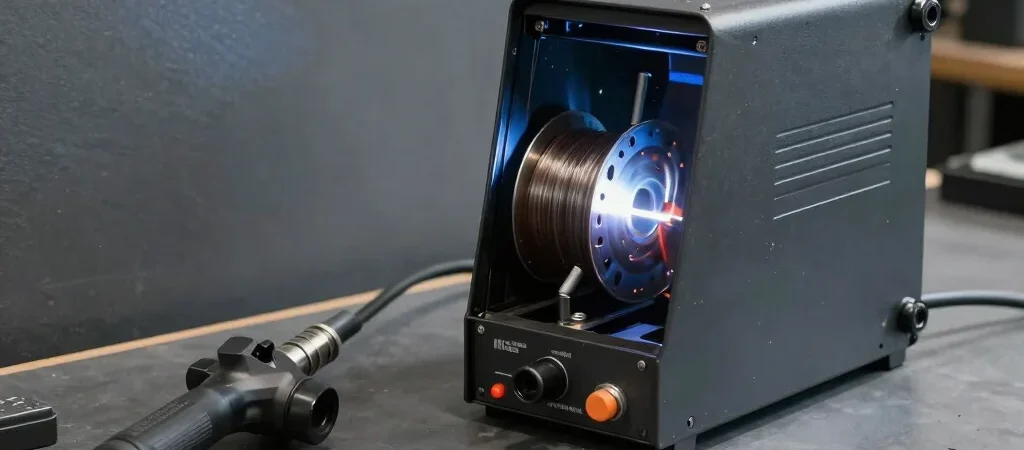
Two MIG welders can advertise similar output and still differ in ways you’ll notice at the bench: wire-feed control, adjustment range, input requirements, and what comes in the box. A useful in-depth review puts those details beside the headline rating instead of treating amperage as a verdict.
Start With Your Material
Before comparing machines, identify the materials and thickness range you expect to weld, along with the wire type and diameter you plan to use. Then check the manufacturer’s published recommendations and supported wire sizes; a general output range does not establish that every wire-and-material combination is supported.
Look closely at the wire drive and its adjustment options, including drive-roll compatibility and how the wire path is accessed for setup. If you expect to use a spool gun for aluminum, confirm that the machine supports the specific gun and control arrangement rather than assuming every MIG unit can accept one.
Read Ratings in Context
A duty-cycle figure describes operating time within a stated test period and output, but it is not meaningful without its accompanying conditions. Compare like with like: note the rated output and test basis shown in each manufacturer’s documentation instead of ranking machines by a percentage pulled out of context.
Input power matters just as much in a home shop. Check whether a unit supports the supply you have, what output is available on that supply, and whether the manufacturer specifies circuit or installation requirements that could change your setup.
Compare the Package and Support
Included accessories can make two listings look more similar than they are. Verify the exact gun, cable lengths, work clamp, regulator, consumables, and any adapters listed for the package you’re considering; included items can vary by configuration or seller.
A strong review separates documented specifications from its author’s opinions and identifies the configuration being discussed. Weldzen may earn a commission through affiliate links, so use the manufacturer’s current documentation to confirm specifications and package contents before purchasing; your best comparison is the one built around your material, power supply, and expected workload.