
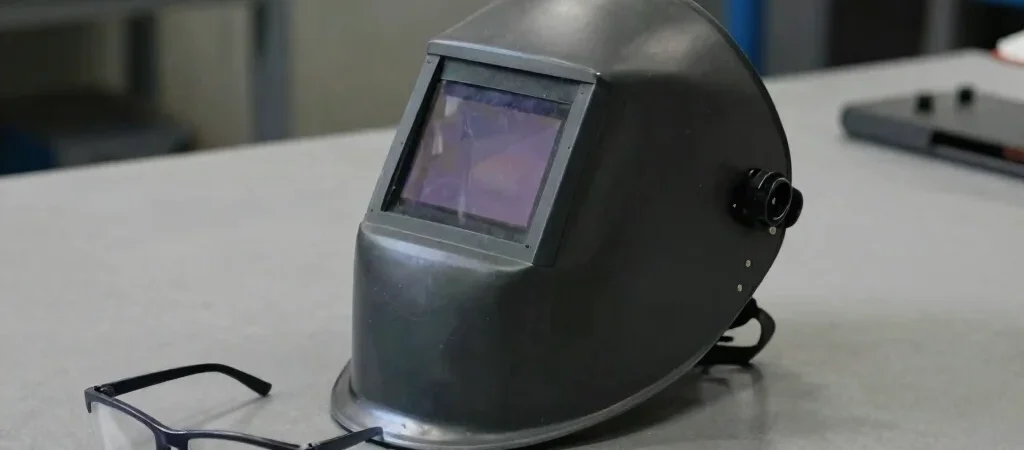
A large viewing area is easy to notice on an auto-darkening helmet comparison; fit and controls are easier to overlook until the helmet is on your head. For a useful gear decision, compare how the lens is specified and adjusted, how the shell fits over your other equipment, and what the manufacturer says about its intended use.
Compare Lens Adjustments
Read the published shade range and adjustment details alongside the processes and current levels you expect to use. Sensitivity and delay controls affect how the lens responds and returns to its light state, but the presence of a dial alone does not tell you whether its range suits your work.
Check the manual for the manufacturer’s recommended settings and limitations for each process. Treat a product listing’s short feature summary as a starting point, not a substitute for the instructions that explain adjustment and operation.
Look at Sensors and View
Compare the number and placement of arc sensors, the stated viewing area, and any grind mode. Those features describe different parts of the helmet’s design; they do not, by themselves, establish how a particular helmet will perform in every position, workspace, or lighting condition.
If you often weld around obstructions or move between positions, consider whether the helmet’s controls and viewing window make sense for those situations. When product pages leave sensor details or lens specifications unclear, look for the manufacturer’s manual or ask the seller to identify the exact model and configuration.
Fit Is Part of the Comparison
A helmet’s headgear, adjustment points, weight, and room for safety glasses can affect whether it stays comfortably positioned through a work session. Check the available fit adjustments and shell dimensions, especially if you wear prescription eyewear, hearing protection, or a respirator alongside it.
Weldzen may earn a commission from purchases made through affiliate links. Confirm the helmet’s specifications, instructions, and included accessories with the manufacturer before deciding, and prioritize a secure fit and clearly documented lens features over a headline feature count.